Category Archives: Insulin

Basaglar – Meet the New Insulin, Same as the Old Insulin

As I type this Eli Lilly is just days from releasing Basaglar, their version of the same insulin in Lantus. If I understand correctly, they’re producing an insulin composed of the same amino acid chain as Lantus, but they’re producing it by their own technique so it’s not under Sanofi’s patent.

Just having another player in the insurance market should be beneficial to patients and insurance companies. Your insurance company may, for instance, negotiate better with Lilly than other pharma companies, and this may be the first time this so-called insulin glargine is available on your formulary…at least at the most economical tier. Sadly the introduction of Basaglar is not expected to create a lot of new competition in the overall marketplace. It’s been suggested that all long-acting basal insulins may eventually come down only 20% or so in reaction to the new player.

This type of insulin is described as a 24-hour insulin, compared to Novo Nordisk’s Levemir, which is described some places as a 20-hour insulin. My son really did seem to have superior results with the 24-hour stuff before it was taken away by insurance. Although he’s on a pump, now, and not using all-day insulin, it would be nice to have access to this superior formulation. Therefore, we welcome Lilly’s innovation.
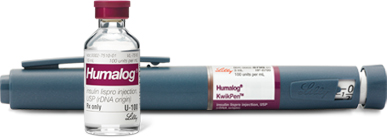
Careful Wielding That Pen!

By now you may be aware that a common insulin regimen is to take one type of insulin for mealtime (bolus) dosing and another for baseline, all-day insulin needs (basal). The communications professional in me says that before taking another step forward, the industry should adopt a new name for at least one of these to avoid confusion. For the sake of teachers and other caregivers we should be using a more universally-meaningful term than “bolus” for the mealtime dose. I don’t have a suggestion, I just hope that those already in the field are communicating effectively.

In our experience the daily basal dose of long lasting insulin is about twice the bolus, mealtime dose. This creates a dangerous situation, particularly if you use “pen” injectors that have a “dial” to scale the dose. Simply put, if you pick up the bolus insulin pen and give yourself the volume of insulin prescribed for your basal dose, it could be fatal. Folks experienced with diabetes usually catch themselves as their blood glucose falls to dangerous levels, but if the dose was a bedtime dose, you may not be conscious-enough to be sensitive to the low.

In describing this situation to others, they propose pens that are color-coded. This is a great step, and I’d like to see standards for this coloring. The people who propose mere color-coding, however are not as absent-minded as I can be. I have another concrete suggestion.

Not all of the liquid one injects is insulin. Most of it is a suspension solution, and the insulin itself tends to be available in so-called U-100, U-200 and U-500 concentrations, My suggestion is that rather than take twice the volume of the basal insulin, it be simply prescribed at twice the concentration, and the pen dial labeled arbitrarily rather than by actual units of insulin. The goal would be for each of the the pens to be dialed up to a much more similar number each time one injects, and giving yourself the numerical volume of either insulin in the other’s dosage isn’t nearly so dangerous. Alternately, one class of pens could be labeled in numbers and the other in letters, or some other way so that the prescribed dose of one pen simply can’t be fulfilled by the mechanism of the other. Judging by how much pricier pens are than vials, much of the prescription price must be going toward the patented mechanism, itself, so there should be plenty of motivation to improve the situation by some means! I’d be glad to hear your thoughts, as well. In the mean time, be careful!

The Six-Billion Dollar Kid

Some experts estimate that 30 million Americans have some form of diabetes or prediabetes. The Centers for Disease Control indicate that 12% of those with diabetes take insulin. That’s 3.6 million Americans to be prescribed, and to buy, insulin each year. In a recent year it was said to be a $24 billion market.

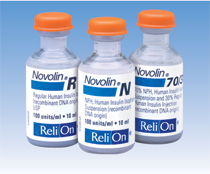
relion-novolin-n-20040_1

Three companies are constantly racing one another to have an insulin proven to work better, and therefore be the most prescribed (and sold)!  Consumer products  can make dubious claims in their commercials or position their products based upon slick imagery and lifestyle branding, rather than facts. For Pharmaceuticals there is at least an attempt at oversight from the Federal Drug Administration, which requires drugs and other therapies to be proven safe and effective.

Current insulins on the market are the end products of billions of dollars of research and development. Diabetes still stinks, and so-called “human analog” insulins are still far inferior to the real thing delivered by your real organs, but it’s good to remember the scale of the research that has gone in to keeping diabetes sufferers as healthy as possible.