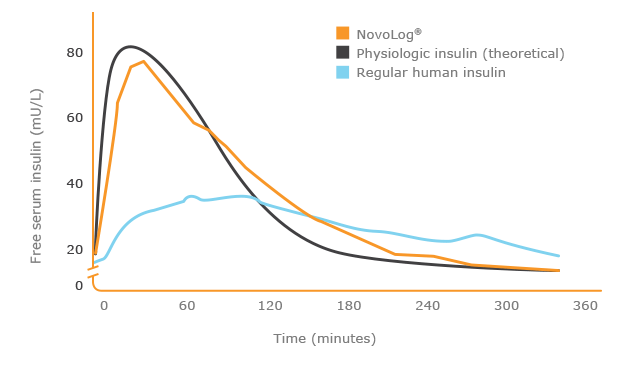
Insulin is not hard to understand in itself. It is the molecular “key” that triggers a cell to “unlock” and allow glucose beyond the cell wall. Within the cell, glucose is used to power much of what the cell does, so it’s obviously critical for the function of these cells.
The role of insulin was not understood until well in to the 20th century. For the next 60 years, animal insulin (from processed meat animals) was used to treat humans, with various implications for the purity and the likelihood of rejection.
In the late 1970’s techniques were developed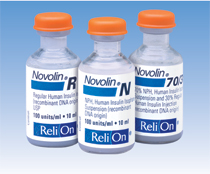 to create insulin through a recombinant DNA technique. Bacteria were genetically engineered to produce insulin as a byproduct of their own growth and replication. Around the turn of the 21st century this insulin was further engineered to create insulin variants with more rapid uptake by cells, better-mimicking natural, so-called metabolic insulin availability.
If it’s not obvious, these engineered, “fast” insulins are covered by patents and other intellectual property rights, and so with no “generics” available, they are more expensive – much more expensive – as long as they are superior. No ethical physician or health plan would deny this superior product to a patient and so prices have become a problem. Watch this space for coverage of the politics involved!
As a parent I was at first concerned with these engineered, new-to-nature insulins invading my son’s cells. Thought of as a hormone, but actually a protein, I was glad to learn that insulin doesn’t actually accompany glucose into the cell, it just serves as the “key to the lock.”
From Wikipedia to sites designed for doctors and researchers, numerous resources are available for a greater understanding of insulin itself and the recombinant DNA process. Suffice it to say this is a mature science and a mature market and we can hope for more advances to come!
 Type1News