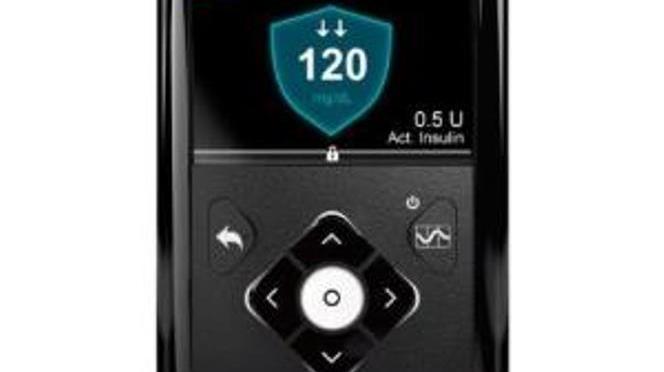
After being first diagnosed with Type 1, most people are asked to begin their insulin management with injection pens or syringes discussed elsewhere on this site. After some history with dosing…and if your insurance allows…an insulin pump may become an option. For the most part, an insulin pump is a tremendous step up in both convenience and blood glucose results, and I highly encourage you to exhaust whatever means necessary to attempt to get a prescription. Some plans require that your physician report that you’re not having good results managing your blood glucose levels without a pump . Other plans may be more progressive. The pumps themselves are really expensive. The Medtronic 630 on my son lists at $8000 and the provider price was still $5700. Still, for superior blood glucose results and fewer long term complications, I feel it’s worth it.
As you read this, I can tell you’re hoping that an insulin pump will slash the number of times each day you’ll have to “poke.” That’s very true. Between an insulin pump and a continuous glucose monitor (discussed elsewhere) you can reduce 12 jabs per day down to 4 most days. Likewise, you can – under good circumstances – turn a dinner table injection into a few quick taps on an iPod-like device.
Unlike the daily regimen with pens, insulin pumps use one type of insulin, so-called fast insulins like Humalog and Novolog rather than Humulin or Novolin. Pumps synthesize the slow uptake of long-lasting insulin by delivering a more-or-less steady dose throughout the day. At meals you input your estimated carb intake and the pump calculates the number of units to deliver based upon the ratios determined by your health care provider. This full “bolus” dose is delivered over just a matter of seconds, similar to an injection.
A pump consists of a computer-controlled screw-drive plunger into which you insert a reservoir with (as of this writing) three days’ worth of fast insulin. Your insulin prescription will change from Kwikpens to vials. There’s substantial savings for your insurance provider in moving from pens to “bulk” insulin, which helps offset their cost, if you need to make a case! You fill the reservoir through a plastic cap with a needle used only long enough to draw out the desired amount of insulin. This reservoir remains attached to the body through a thin flexible tube and a cannula – a needle set, essentially, poked into the body and taped in place. Some people envision such a pump connected to a permanent “port” on the body, but that’s not the case. The “needle” is actually a soft(ish) tube itself, so there’s less risk of injury from an impact causing deeper insertion or a tear!
In our experience, even with showering each day, the cannula stays attached with the adhesive pad provided. We’ve occasionally had blood glucose “highs” that we thought might be the result of some sort of “clog” due to overnight alignment of the needle in the tissues, but for the most part it has been a great experience.
 Type1News