Whether you’re new to diabetes or not, you’re likely aware that the prices charged to insurance plans can vary widely. Only one of two pharmaceuticals regarded as identical may show up on your list of allowed drugs – or not – based upon negotiations that are entirely secret. In the best cases, this allows your insurance plan to put two drug firms into competition. Often in America, this means that the non-negotiated price – the retail price – is fabulously inflated. (See news stories on Epi-pens or Martin Shkreli.) We’re told that this higher starting point allows drug manufacturers to maintain enough margin to innovate on our behalf. A primary side effect is that those without insurance can find that many therapies are simply out of reach. Before the Affordable Care Act, stories of bankruptcies and deaths were prevalent. Knowing human nature, we suspect that many of these stories are absolutely true.
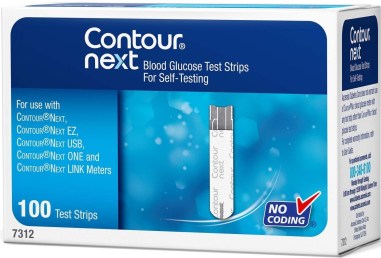
Even at their negotiated prices, insurance plans are often billed higher rates than you can find for diabetic supplies. This is one reason that plans seem to be so stingy. Your endocrinologist may earnestly submit a prescription for a reasonable 6 tests per day, and your plan budgets you for 4. It’s easy to think there is scholarship or experience behind the allowance, but don’t allow yourself to think this. It’s almost certainly just economics. Information is a key tool in type 1 diabetes, and you shouldn’t skimp.
…test strips…for less than 25 cents…
My son’s condition was discovered when he had an incidence of ketoacidosis. While he was still in intensive care he was prescribed Contour Next test strips. When he was released that’s what the Doctor prescribed, and now that he’s moved to an insulin pump, that’s what his integrated glucose tester uses. These strips can easily cost a dollar per test at your pharmacy. Once your deductible is met, I can’t say what your insurance plan pays, but if they’re saving $2 per day by limiting you to 4, that’s $720 per year. A shortsighted savings on their part, but a real savings. We have been augmenting our insurance-provided strips by buying test strips through Amazon.com for around 33 cents each. An extra 100 strips can give you peace of mind by allowing you to test more often each day for almost two months. That’s about $5 per week to allow you to check blood sugar when you’re curious, not just to inform a meal bolus.
We’ve never had any trouble with supplies ending up being post-dated or problems with strips that had been environmentally damaged in shipment. If your experience is otherwise, let us know! We’ll do some research on the vendor and help keep the good guys in business!
 Type1News